Kraków of alchemists and witches — an occult history trail
In the Middle Ages and the Renaissance, Kraków was not only a royal capital and university city but also an important centre of the occult sciences. Astrology was taught at the Kraków Academy, the famous alchemist Michael Sendivogius worked here, and legends about the sorcerer Master Twardowski are still told today. Here are the places where you can follow these stories in Kraków today — from Collegium Maius to Zakrzówek.
Alchemy and astrology in old Kraków
Alchemy — the art of turning base metals into precious ones, but also the search for the philosopher’s stone and for medicines — was taken quite seriously in medieval and Renaissance Europe. The Kraków Academy, founded in 1364, had a chair of mathematics and astronomy and, from 1459, a chair of astrology too, endowed by the will of Marcin Król of Żurawica. Every year its professor published a forecast for the coming year. Alchemy wasn’t officially taught, but it was practised at the university.
Kraków’s most famous alchemist was Michael Sendivogius (Michał Sędziwój). He first encountered alchemy and the ideas of Paracelsus as a student in Kraków. He became famous for his treatise “Novum Lumen Chymicum”, published anonymously in Prague in 1604 and reprinted more than 50 times. In it he described a hidden “food of life” in the air, linked to saltpetre — which is why he is regarded as a forerunner of the discovery of oxygen, more than 150 years before Scheele, Priestley and Lavoisier.
A trail of alchemists and witches in Kraków
1. Collegium Maius (Jagiellońska 15)
The oldest building of the Jagiellonian University is now a museum. The tour includes a reconstructed alchemist’s workshop — with alembics, retorts and vessels known as pelicans — and 16th-century astronomical instruments.
2. Sendivogius’s house (corner of Szczepański Square and św. Tomasza Street)
One of Sendivogius’s Kraków residences stood on this corner. The house was demolished in 1908; Gothic doors and a Renaissance sculpture were found in its cellars, and some of the finds went to the lapidarium of the Czapski Museum.
3. Krzysztofory Palace (Main Square 35)
The palace is linked to legends of Master Twardowski and of treasure hidden in its cellars. Its documented history is just as interesting: around 1600 it housed one of Kraków’s oldest pharmacies, and in the 19th century the printing house of the newspaper “Czas”. Today it is the headquarters of the Museum of Kraków.
4. Town Hall Tower (Main Square 1)
Beneath the former town hall there was a prison with a torture chamber and the executioner’s quarters, first mentioned as early as 1384. This is where the accused — including those charged with witchcraft — were brought. The town hall itself was demolished in the 19th century; only the tower survives, now a branch of the Museum of Kraków. According to historian Barbara Faron, author of a book on superstitious old Kraków, alleged witches fared better here than in many Western cities.
5. The pillory and the knife in the Cloth Hall
On the Main Square, opposite the Spiski Palace, stood the pillory, where punishments and executions were carried out — the last in 1794. The gallows stood outside the city. A reminder of old-time justice is the knife hanging in the Cloth Hall, a warning to thieves.
6. Wawel — the Hen’s Foot Tower
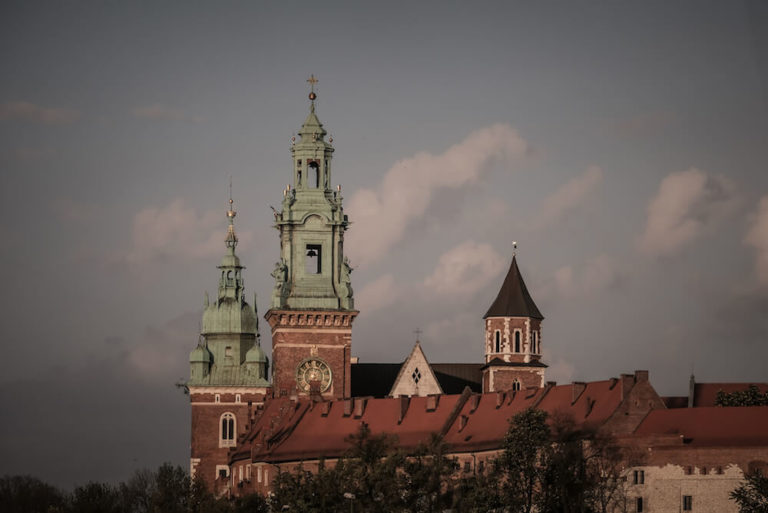
According to tradition, Sendivogius’s workshop was at Wawel, in the tower known as Kurza Stopka (the Hen’s Foot), while he worked for King Sigismund III Vasa.
7. Twardowski Rocks (Zakrzówek)
Master Twardowski, the Polish Faust who sold his soul to the devil, is said to have had his workshop in a cave in the Twardowski Rocks on the former Krzemionki hills. Today it’s a popular walking area by the Zakrzówek lagoon. Twardowski’s famous mirror, however, isn’t in Kraków — it is kept in a church in Węgrów.
Where to stay in Kraków
The trail starts and ends in the Old Town, so the most convenient base is Best Western Plus Kraków Old Town at Świętej Gertrudy 6, about 500 m from the Main Square. A characterful alternative is Hotel Regent in a historic townhouse in Kazimierz.
Frequently asked questions
Who was Michael Sendivogius?
A Polish alchemist of the late 16th and early 17th century, a graduate of the Kraków Academy and author of “Novum Lumen Chymicum” (1604). He is regarded as a forerunner of the discovery of oxygen.
Where can I see an alchemist’s workshop in Kraków?
At the Jagiellonian University Museum in Collegium Maius, Jagiellońska 15 — it’s a reconstruction of a historic workshop.
Where are the traces of Master Twardowski in Kraków?
Legend links him with the Twardowski Rocks at Zakrzówek and with Krzysztofory Palace on the Main Square.
Updated in October 2026.