The Mongol invasions of Kraków — 1241, 1260, 1287 and the city’s Tatar legends
The Tatars (Mongols) attacked Kraków three times: in 1241, 1260 and 1287. The first time they burned the city, the second time they took it quickly, and the third time — thanks to new fortifications — the townspeople held them off. Reminders of these events can still be seen and heard in Kraków today, although some of them are later legends. Here are the Tatar stories of Poland’s old capital.
Who were the Tatars?
Medieval chroniclers used the name Tatars for the peoples of the Mongol Empire united by Genghis Khan. Within a few decades his state conquered vast areas of Asia and then moved west — subjugating most of the Rus’ principalities and raiding Central and Eastern Europe.
1241: the first invasion and the burning of Kraków
The first great campaign began in the winter of 1241. After a February raid in which Sandomierz fell on 13 February, the Mongols withdrew, but struck again in March. On 18 March they defeated the knights of Lesser Poland at Chmielnik and marched on Kraków. They entered the town, abandoned by its inhabitants, probably on 22 March, burned it on 31 March and left for Silesia on 1 April. Wawel held out, and the only church that withstood the attack was the Romanesque Church of St Andrew on Grodzka Street.
1260 and 1287: further invasions
In February 1260 Burundai’s army quickly took Kraków. The first reliable mention of the town’s fortifications is Duke Leszek the Black’s privilege of 1285 for earth-and-timber ramparts. They passed the test just two years later: during the third invasion, in a siege that began on 24 December 1287, the townspeople defended the city.
Tatar reminders in Kraków
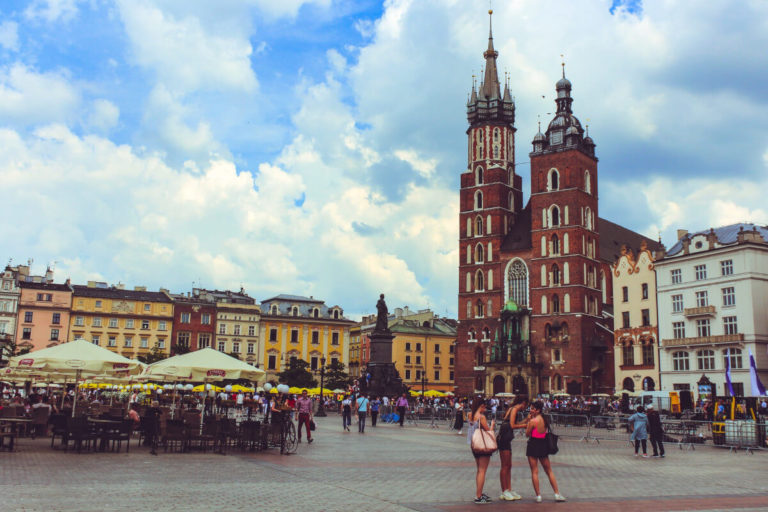
The hejnał trumpet call from St Mary’s Basilica breaks off mid-melody — according to legend, in memory of a trumpeter struck by a Tatar arrow in 1241 as he warned the city. The hejnał itself is recorded from 1392, but the arrow story was only written down in 1928 by the American author Eric P. Kelly.
The Lajkonik, a rider in Tatar costume, parades every year on the Thursday after Corpus Christi from Zwierzyniec to the Main Square. Legend links him to raftsmen who defeated the Tatars, though the custom’s true origins are uncertain — read more in our post on the Lajkonik.
The Maiden Rocks (Skały Panieńskie) in the Wolski Forest are, according to legend, where the earth opened up for Norbertine nuns fleeing the Tatars and hid them forever.
Where to stay in Kraków
The best place to hear the hejnał is the Main Square — Best Western Plus Kraków Old Town at Świętej Gertrudy 6 is about 500 m away, and St Andrew’s Church on Grodzka is a few minutes’ walk. A characterful alternative is Hotel Regent in Kazimierz.
Frequently asked questions
How many times did the Tatars attack Kraków?
Three times: in 1241 (they burned the city), 1260 (they took it) and 1287 (the townspeople held out).
When did the Tatars burn Kraków?
During the first invasion — they entered the city probably on 22 March 1241 and burned it on 31 March.
Is the legend of the trumpeter and the Tatar arrow true?
Probably not — the hejnał is recorded from 1392, but the arrow story was only written down in 1928.
Updated in October 2026.